I've already covered why I pulled my tree out of Geni – ownership, and being able to query it instead of clicking through it.
Here's what that made possible: the tree sat at 56 direct-line ancestors and 6 generations deep for about a decade. This week, I built a tree viewer, a location map, and set an AI loose on the research itself – my tree now goes to 262 ancestors across 18 generations, the earliest confirmed birth pushed back 346 years – from 1736 to 1390.
Roughly 4.7x the ancestors, three times the depth, in under a week.
The multiplier isn't the AI being cleverer than a genealogist. It's throughput. It can eyeball a scanned marriage register or death certificate and pull names, dates, and occupations faster than I can read the handwriting myself, and it holds every name and date across hundreds of records in working memory at once, catching contradictions I'd have missed on page 40 of a search.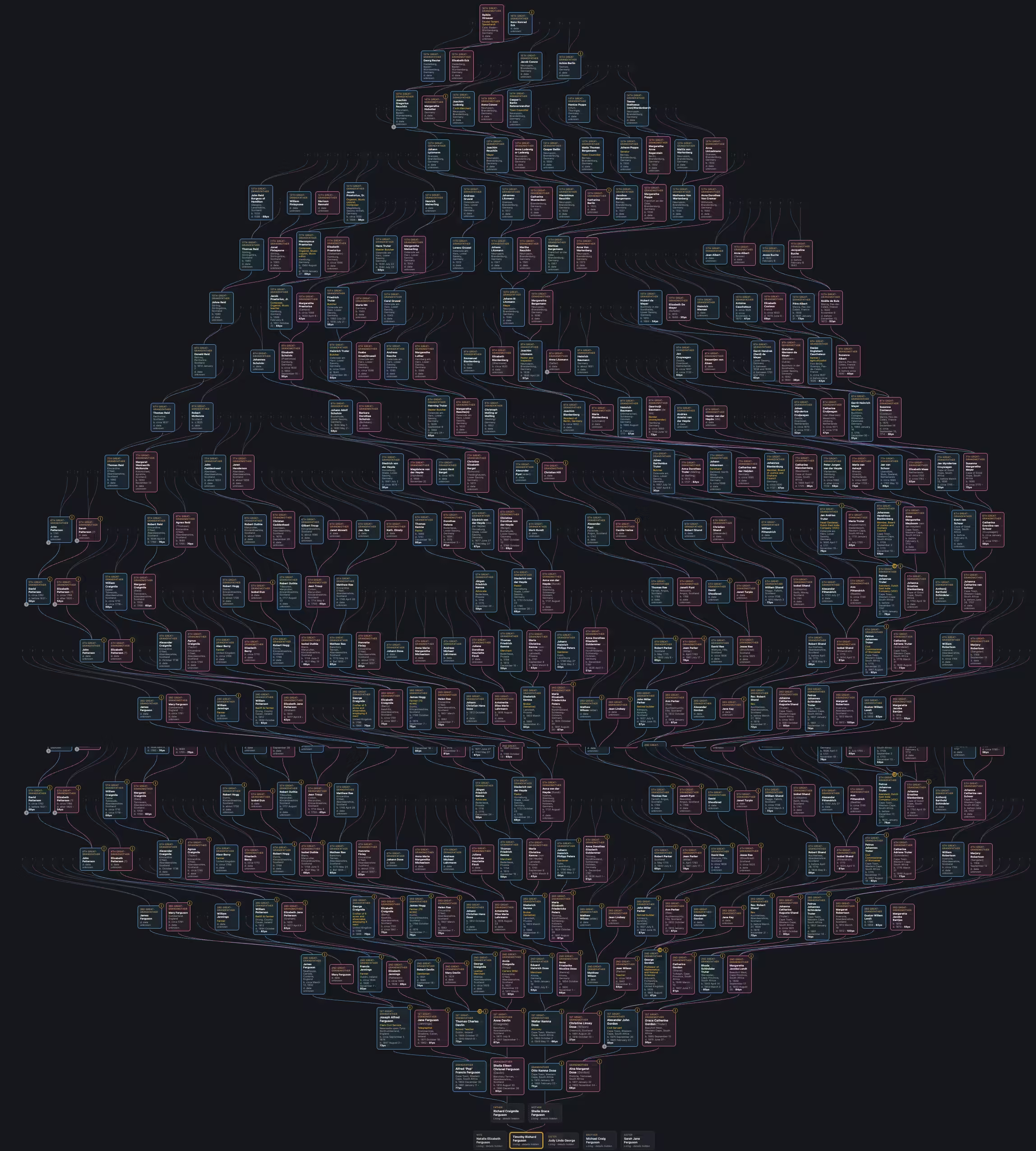
It pulls structured data straight out of Geni's API, scrapes FamilySearch and WikiTree pages via a markdown browser extension, and helps me check ScotlandsPeople or the Irish civil registration archives when a document actually needs finding rather than guessing at.
I'm still needed for my own family knowledge and some common sense – whose spelling of a name to trust, which of two conflicting dates is more likely right, when a discrepancy is worth chasing versus flagging and moving on. But the part that used to take ages manually entering data into a platform, took less than week. And the tree's better documented for it than it ever was before.