I've just pulled my family tree out of Geni.com and rebuilt it as something I actually own. I wanted a copy of it that wasn't dependent on any platform's continued goodwill, pricing model, or uptime.
I've extracted the full ancestor data – names, dates, birthplaces, relationships – and turned it into my own dataset rather than leaving it locked up.
How?
In principle, it's just a small script that climbs the tree one generation at a time – who was my mother, who was my father, then theirs, then theirs – pulling whatever the platform knows about each person as it goes. No manual exports, no copy-pasting profiles. It just keeps climbing until records run out. Then I take the top of every line and walk back down filling the breadth – brothers/sisters/children.
Why?
I can now ask questions and get immediate answers. Questions that a genealogy site makes me click around for hours and still leaves me no confidence that I've even got an answer – like exactly how many generations back I have real data for? Or, how far does any single line go?
Answer: I have a 12th great-grandfather born circa 1530 in Magdeburg, Germany who was an "Organist, Music copyist, Composer"
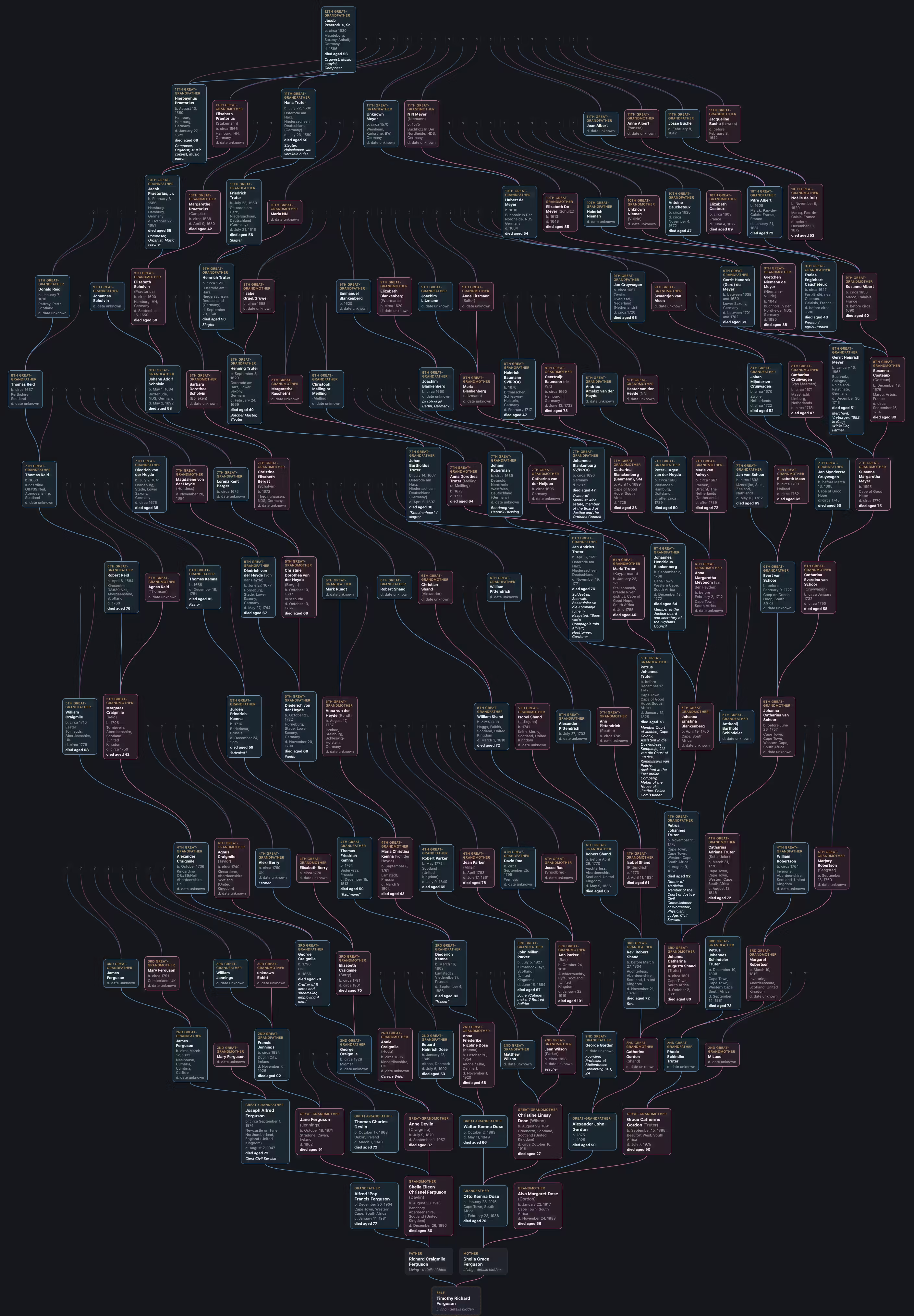
My ancestors to the 14th generation
The perspective this surfaces
The thing that struck me almost immediately is how badly most family tree tools represent scale. They'll happily show you "2nd great-grandparent" as a relationship label, but they don't make it visceral that you had 16 of them – or that by your 12th great-grandparents, there are over 16,000 people in that generation that contribute to your DNA.

14 generations back – only 0.61 percent identified

10 generations back – only 7.52 percent identified

7 generations back – 37.25 percent identified
Building my own viewer made that gap impossible to ignore in a way a list view (or most tree viewers I've seen) never does. It's less "here's your tree" and more "here's how much of your tree is actually dark."